One Year On: Building Mould Testing Capability at Hill Labs
Just over a year ago, Hill Labs expanded its environmental testing services with the introduction of mould analysis. Since then, we've worked alongside consultants, assessors, hygienists, remediation specialists and property professionals across New Zealand, helping their investigations into moisture-related issues, assess mould contamination in indoor environments, and support remediation projects.
The addition of mould testing was driven largely by client feedback. Many of our customers were already using Hill Labs for asbestos, methamphetamine and environmental testing and were looking for a simpler way to access mould analysis through the same trusted laboratory partner.
A year on, that's exactly how the service is being used.
Today, clients can submit mould, asbestos, methamphetamine, lead and other environmental samples through Hill Labs' nationwide laboratory network, reducing the need to manage multiple providers and helping streamline project workflows.
Understanding What's Really Happening in a Building
Mould can be visible, but the extent of a problem is not always obvious.
Testing is often used as a tool to aid investigations into underlying moisture issues, potential mould contamination in indoor environments, to establish baseline conditions before remediation, or to help determine whether remediation has been successful.
Because mould spores occur naturally in the environment, interpretation is often more complex than simply confirming whether mould is present or not. Understanding the type of mould present and the concentration of spores can provide valuable context when assessing building health and determining appropriate next steps.
Hill Labs currently offers two internationally recognised testing methods, including Direct Examination (Tape Lift Method) and Spore Trap Analysis. These methods support investigations across residential, commercial, and industrial settings and can be used as part of wider indoor environmental quality assessments.
The Expertise Behind the Results
While sampling methods are important, accurate mould analysis also relies on experienced analysts who can identify and interpret what they're seeing under the microscope.
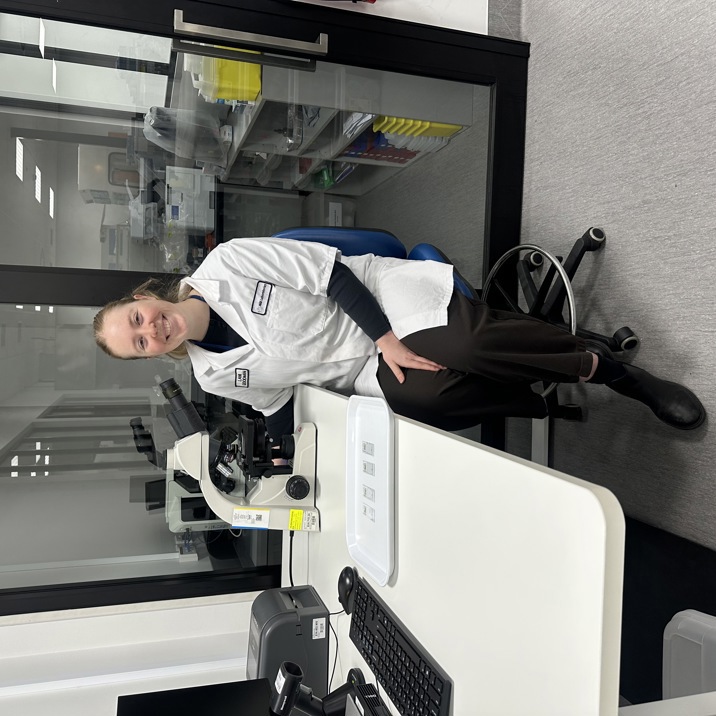
One of the specialists behind Hill Labs' mould testing service is Senior Laboratory Technician Lani Goodman, who has analysed thousands of mould samples across New Zealand and Australia. Much of the work takes place under a microscope, where experience and attention to detail are essential.
"Non-culturable mould testing relies heavily on the experience of the analyst and their ability to accurately identify spore types and apply consistent counting parameters," says Lani.
It's a role that requires patience, technical knowledge and a sharp eye. Lani says mould analysis is about recognising the subtle differences that make each spore type unique.
"Mould testing comes down to what we can see under the microscope. We are trained to spot small differences between spore types, such as their shape, colour, size, texture, and branching patterns."
While many samples contain commonly encountered spores, there are still moments that break the routine.
"It's always exciting when we come across a rare spore type, or one we haven't seen in a while. They all have their own little character and quirks."
Hill Labs provides mould testing through laboratories in Auckland, Wellington and Christchurch, giving clients convenient access to local testing and support.
Read more about Lani's role and the science behind mould identification.
Supporting Clients in the Field
Over the past year, we've also seen growing demand for airborne mould assessments.
To support this work, Hill Labs offers mould air sampling pump hire, providing clients with access to the equipment required for spore trap sampling and indoor air quality investigations.
Combined with responsive technical support and nationwide laboratory coverage, this makes it easier for clients to collect samples, meet project deadlines, and obtain reliable laboratory results.
Looking Ahead
As awareness of indoor environmental quality continues to grow, mould testing is becoming an increasingly important part of building assessments and remediation projects.
We're proud to have established this capability within Hill Labs over the past year and to be supporting clients throughout New Zealand with local service, experienced analysts and the reliable results they've come to expect from us.
Learn more about mould testing and pump hire on our website, or check out our technical note. Alternatively you can contact the team at env.csm@hill-labs.co.nz or call 0508 44 555 22 for more details.